Research
Gas in and around galaxies across cosmic time
Galaxies do not form stars in isolation. They sit within the cosmic web, a network of filaments that connects them to one another and to a far larger reservoir of gas. Galaxies draw on that reservoir and expel gas back into it; the balance between those flows sets how many stars they can form.
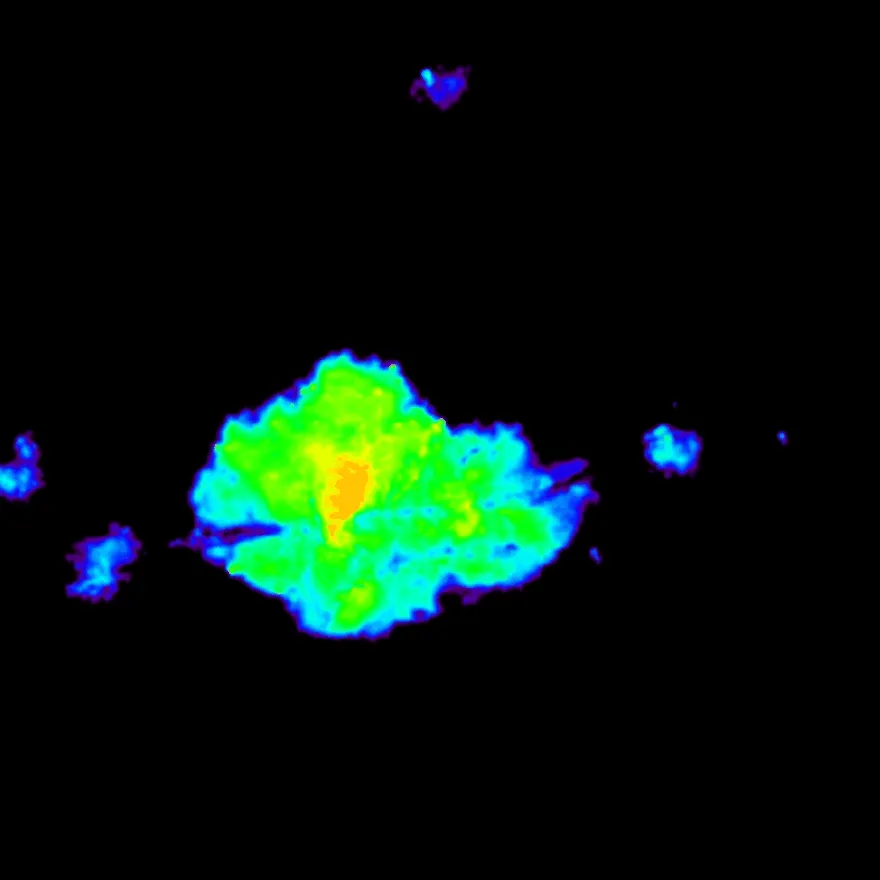
I study where and how that exchange happens. My focus is the circumgalactic medium — the diffuse gas surrounding galaxies — and three questions about it: how it is enriched with metals, how it moves, and how it connects a galaxy to the filaments feeding it. Mapping those properties across cosmic time lets us trace the paths galaxies follow to become the diverse population we see today.
I am also interested in the role of environment. Groups, clusters, and filaments leave their mark on both the circumgalactic gas and the galaxies embedded in it, and separating that mark from a galaxy's internal evolution is a large part of the problem.
This work draws on deep integral-field spectroscopy — principally MUSE on the VLT — space-based imaging and spectroscopy with HST and JWST, high-resolution absorption spectroscopy, and cosmological simulations, which turn a physical model into a prediction an observation can test.
New technologies in education
Alongside my work as an astrophysicist, I have a growing interest in how modern technology — artificial intelligence, connected devices, educational robotics — is changing the way young children encounter science and mathematics.
Current and recent projects
JWST/PID 10096 · 2026-
JWST Analysis of Gas and Galaxies at the End of ReionizationJAGGER
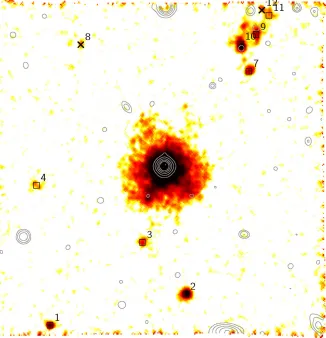
This JWST blind galaxy survey around six of the brightest z~5-5.5 quasars traces the co-evolution of galaxies and their circumgalactic medium in a new redshift window and places robust constraints on how the reionization epoch transforms the baryon cycle.
Program page
ESO PID 1100.A-0528 · 2017-2026
The MUSE Ultra Deep FieldMUDF
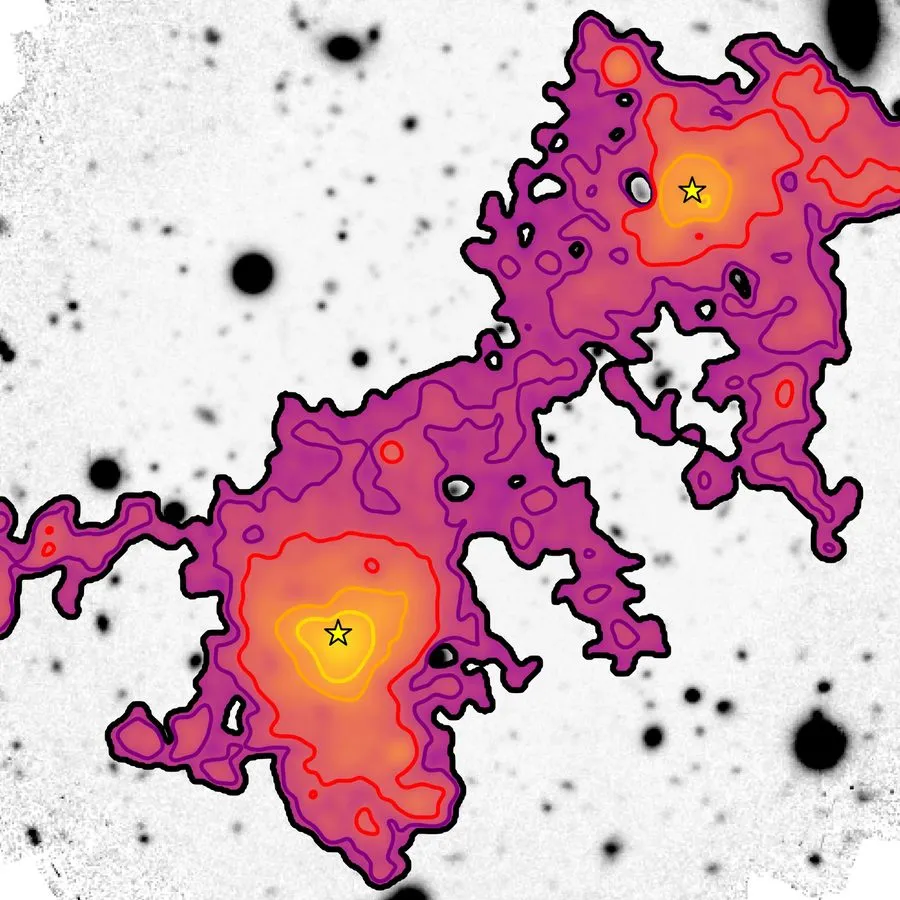
The MUDF is an ambitious 150-hour MUSE program in a field with two bright quasars separated by 500 kpc. This unique dataset allows us to investigate the connection between the intergalactic and circumgalactic medium both in absorption and in emission.
Papers
ESO PID 197.A-0384 · 2016-2025
The MUSE Analysis of Gas around GalaxiesMAGG
MAGG targets 23 bright z~3-4 quasars with excellent high-resolution spectroscopy to transform the view of the baryon cycle across cosmic noon both in emission and in absorption.
Papers
Education initiative · 2025-
Laboratorio Bicocca per la Didattica STEMDiSTEMLaB
DiSTEMLaB is a leading hub for STEM education dedicated to teachers and students within the school system. DiSTEMLaB supports teachers and schools—from kindergarten through secondary level—in the design of laboratory-based educational activities for STEM learning.
Webpage